
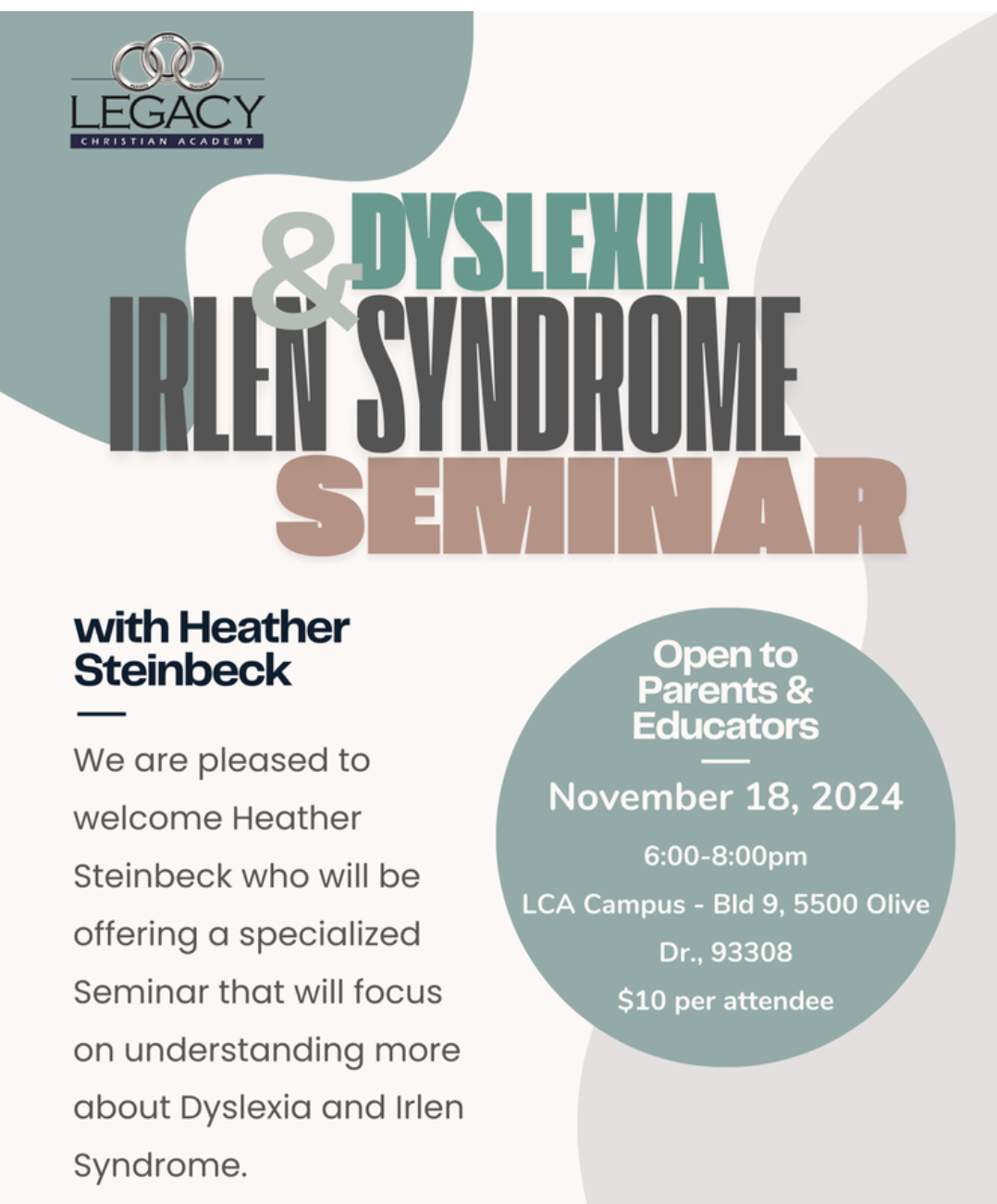
This seminar took place on November 18, 2024. For current seminar information, contact Heather.
More About the Seminar
This seminar is the perfect roadmap for helping parents or educators better understand these common and sometimes misunderstood disorders.In this two-hour seminar, I will cover the most common warning signs you need to know about dyslexia and IrlenⓇ Syndrome. I will dig deeper into the different conditions and types of dysgraphia and what to look for in a writing sample. We will look at common myths and find the truth behind each one. You will walk away with a better understanding of the most common warning signs, the incredible strengths that come with dyslexia, solutions that work, and recommended accommodations so every child can thrive.
What is dyslexia?
Dyslexia is a language processing disorder that affects one's ability to decode words quickly and accurately. When this happens, it plays a huge role in comprehension and receiving effective classroom instruction. Dyslexia also causes difficulty with spelling and written expression.
Often, even in college-level courses, dyslexia is not taught at all or in an in-depth way. Dyslexia affects 1 in 5, which makes up 20% of our population. If you bring those numbers into a classroom, that means in a classroom of 30 students, you may have 6 students with dyslexia to some degree. Our teachers need to understand this so we can support our students and accommodate them as necessary. Parents who have a child who is struggling with reading and writing need to understand that one of these conditions could be the reason they are struggling.
What is Irlen Syndrome?
IrlenⓇ Syndrome, also known as Scotopic Sensitivity, affects various people in the population. It can coexist with conditions like dyslexia, ADHD, Autism, concussions, traumatic brain injury, and more. IrlenⓇ Syndrome is a perceptual processing disorder that causes the brain to become overstimulated or overactive from visual stimuli such as light, print, and patterns within the environment. When the brain becomes overstimulated, several things can happen when someone tries to read, write, and focus. We will address the difference between these two conditions.